European Oak vs White Oak vs Red Oak Flooring: What's the Difference? A Complete Buyer's Guide
July 8, 2026
Author: Cozy Wood Flooring Official
European Oak vs White Oak vs Red Oak Flooring: What's the Difference?
Introduction
Oak flooring has remained one of the most popular hardwood flooring options for decades. Its natural beauty, durability, and versatility make it a preferred choice for homeowners, architects, contractors, and commercial developers worldwide.
However, many buyers become confused when comparing European oak, white oak, red oak, and the term "Chinese oak." These names are often used interchangeably in the market, yet they do not always refer to the same wood species or quality standards.
If you are planning to import hardwood flooring, specify materials for a construction project, or compare suppliers, understanding these differences is essential. Factors such as grain pattern, hardness, color variation, stability, and price all influence the performance and appearance of the finished floor.
In this guide, we'll explain the characteristics of each type of oak flooring and help you determine which option best suits your project.
Quick Comparison Table
Feature
European Oak
White Oak
Red Oak
Chinese Oak*
Main Origin
Europe
North America
North America
China (market term)
Color
Light golden to medium brown
Light beige to brown
Pinkish to reddish brown
Depends on species
Grain
Elegant, straight, slightly rustic
Straight with moderate variation
More pronounced grain
Varies
Hardness
High
High
Medium-High
Depends on species
Moisture Resistance
Excellent
Excellent
Moderate
Varies
Commercial Popularity
Very High
Very High
High
Limited internationally
Common Applications
Luxury homes, hotels
Residential & commercial
Residential flooring
Domestic projects
*In international flooring specifications, "Chinese Oak" is not a standardized wood species. The term is sometimes used in local markets to describe oak sourced or processed in China, or other oak-like hardwoods.
What Is European Oak Flooring?
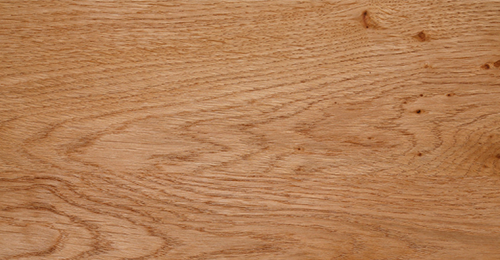
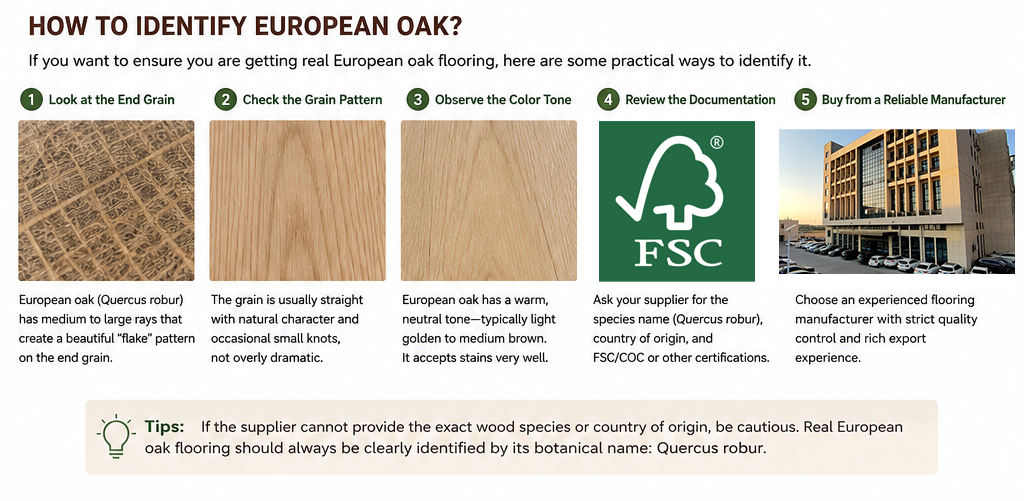
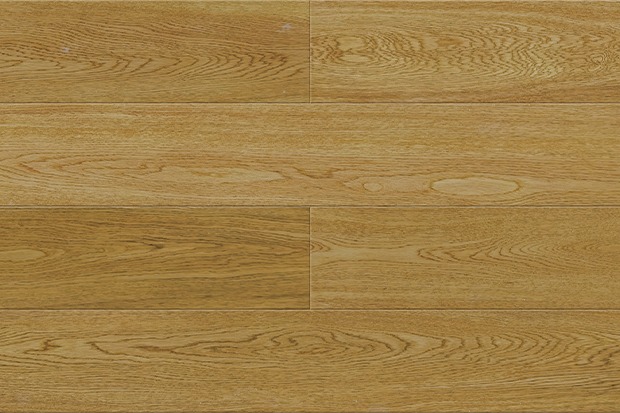
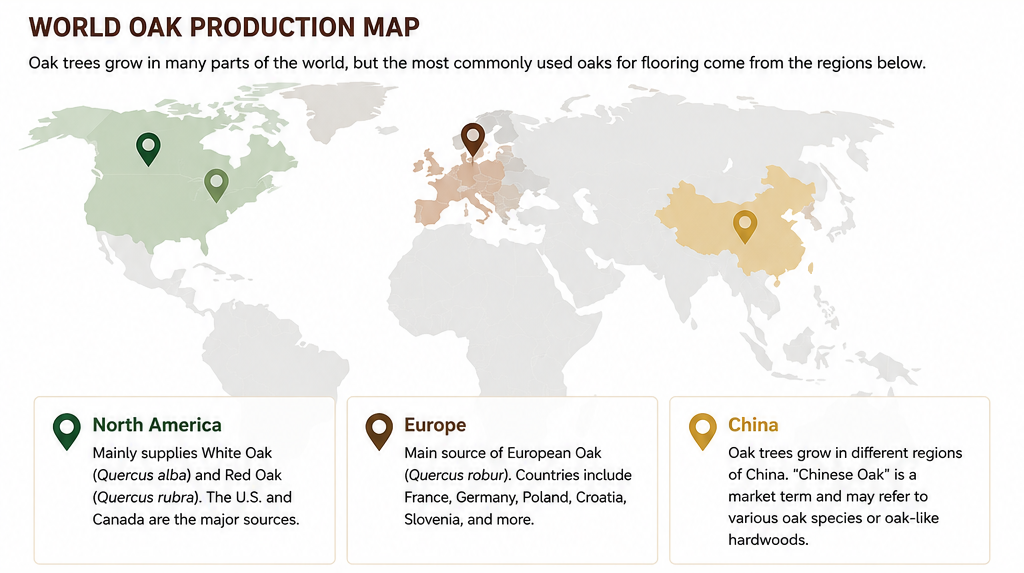
European oak flooring is manufactured from oak trees primarily grown across Central and Western Europe. The species most commonly used is Quercus robur, valued for its attractive grain, consistent color, and excellent stability.
Today, European oak is one of the most sought-after materials in premium engineered hardwood flooring because it combines timeless aesthetics with reliable performance.
Key Characteristics
Elegant natural grain
Warm, neutral color tones
Excellent dimensional stability
Suitable for wide plank flooring
Accepts stains and finishes exceptionally well
Because of these qualities, European oak has become a favorite among architects and interior designers working on luxury residential and hospitality projects.
Common Applications
European oak flooring is frequently used in:
Luxury villas
Boutique hotels
High-end apartments
Restaurants
Commercial offices
Retail stores
Its refined appearance complements modern, Scandinavian, minimalist, and classic interior styles.
What Is White Oak Flooring?
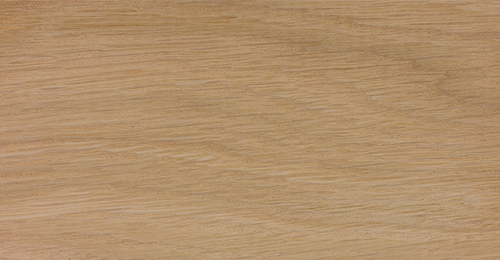
White oak flooring is produced primarily from Quercus alba, a species native to North America. It is one of the most widely used hardwood flooring materials in the United States and Canada.
White oak is known for its strength, durability, and closed cellular structure, which provides better moisture resistance than many other hardwood species.
Main Features
Light beige to medium brown color
Straight and clean grain
Excellent wear resistance
High hardness
Better moisture resistance than red oak
These characteristics make white oak flooring suitable for both residential and commercial applications.
Why Contractors Prefer White Oak
Many contractors recommend white oak because it provides:
Reliable installation performance
Long service life
Wide availability
Consistent quality
Compatibility with engineered flooring construction
It is also one of the most popular choices for wide plank engineered hardwood flooring.
What Is Red Oak Flooring?
Red oak flooring comes mainly from Quercus rubra, another North American oak species.
For many years, red oak dominated the U.S. hardwood flooring market. Although it remains popular, current design trends increasingly favor the softer, more neutral appearance of white oak and European oak.
Main Characteristics
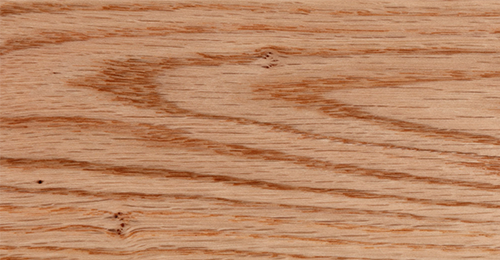
Warm reddish undertones
More visible grain pattern
Good hardness
Easy machining
Excellent stain absorption
Because of its distinctive color, red oak is often selected for traditional American interiors.
Typical Applications
Red oak flooring is commonly found in:
Single-family homes
Residential renovations
Traditional interior designs
Small commercial spaces
Although durable, its open grain structure generally makes it less moisture-resistant than white oak.
Is "Chinese Oak" Really Oak?
One of the most common questions from international buyers is whether Chinese oak flooring is the same as European or North American oak.
The answer depends on how the term is being used.
Unlike European oak, white oak, or red oak, "Chinese oak" is not an internationally recognized botanical classification. In export markets, hardwood flooring is usually identified by its wood species rather than by the country where it is processed.
In China, the phrase "Chinese oak" may refer to:
Oak harvested within China
Flooring manufactured in China using imported oak logs
Oak-like hardwoods marketed locally
For importers and contractors, the most reliable approach is to request the exact wood species rather than relying on general market terminology.
When sourcing flooring, always confirm:
Botanical species
Country of origin
Grade
Moisture content
Product construction (solid or engineered)
This ensures that the flooring meets project specifications and quality expectations.
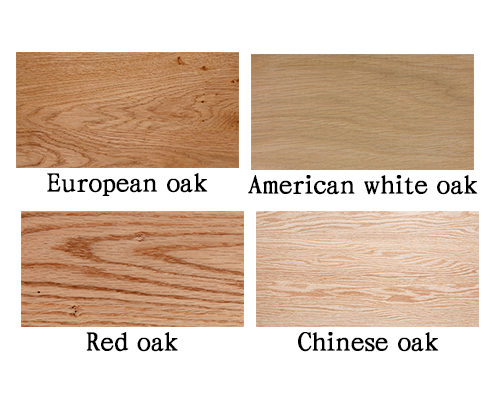
Appearance Comparison
Appearance is often the first factor buyers consider when selecting hardwood flooring.
Feature
European Oak
White Oak
Red Oak
Color
Warm, natural golden brown
Light beige with subtle brown tones
Pinkish or reddish brown
Grain Pattern
Elegant and slightly rustic
Straight and clean
More pronounced and traditional
Knots
Available in multiple grades
Generally fewer in higher grades
Moderate
Modern Interior Style
Excellent
Excellent
Good
Traditional Interior Style
Good
Very Good
Excellent
European Oak
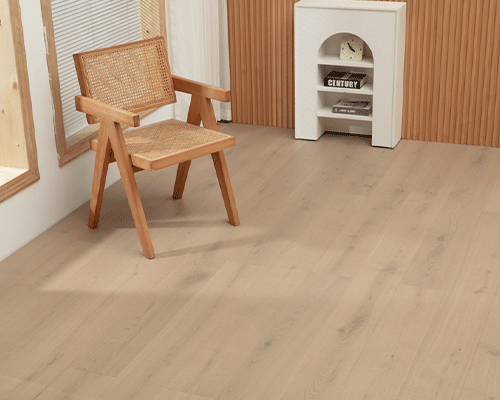
European oak offers a sophisticated appearance with natural character, making it particularly popular in contemporary and luxury interiors.
White Oak
White oak has a cleaner and more uniform look, making it ideal for minimalist and modern architectural designs.
Red Oak
Red oak provides a warmer, more traditional appearance that continues to appeal to homeowners seeking classic North American aesthetics.
Hardness Comparison
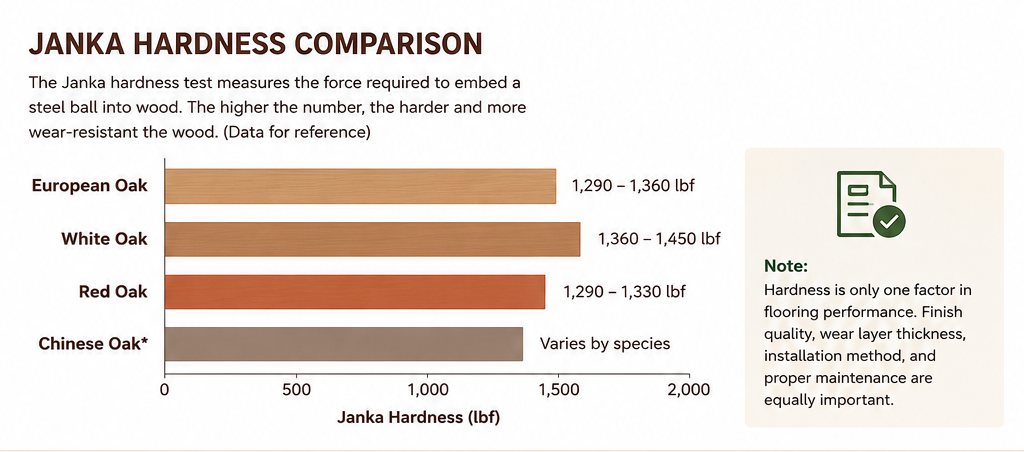
Hardness is one of the most important factors when selecting hardwood flooring, especially for commercial projects or high-traffic residential spaces. While no hardwood floor is completely scratch-proof, harder wood species generally provide better resistance to dents and daily wear.
The hardwood flooring industry commonly uses the Janka Hardness Test to compare the resistance of different wood species. Rather than focusing only on numerical values, contractors should understand how each species performs in real-world applications.
Wood Species
Relative Hardness
Daily Performance
European Oak
High
Excellent for residential and commercial use
White Oak
High
Excellent durability and wear resistance
Red Oak
Medium-High
Suitable for most residential applications
Chinese Oak
Varies
Depends on the actual species used
In practice, both European oak and white oak provide excellent durability for most flooring projects. While white oak is slightly harder than European oak in many cases, the difference is generally not noticeable in everyday residential use.
For commercial environments with heavy foot traffic, surface finish, wear layer thickness, and maintenance practices often have a greater impact on long-term performance than hardness alone.
Stability Comparison
Dimensional stability refers to how well flooring resists expansion and contraction when temperature and humidity change.
This factor is particularly important for projects in regions with seasonal climate variations, such as the United States, Canada, and parts of Europe.
Wood Species
Stability
Suitable for Engineered Flooring
European Oak
Excellent
Excellent
White Oak
Excellent
Excellent
Red Oak
Good
Good
Chinese Oak
Depends on species
Depends on construction
European oak is widely recognized for its excellent stability, making it one of the most popular choices for engineered hardwood flooring. Its structure allows manufacturers to produce wide plank flooring with reduced risk of movement.
White oak also performs exceptionally well, particularly when used in multi-layer engineered flooring with a high-quality plywood core.
Although red oak remains a reliable flooring material, its more open grain structure generally makes it slightly more sensitive to moisture than white oak.
Price Comparison
Price is often a deciding factor for contractors and importers, but it should always be evaluated alongside quality, consistency, and long-term value.
Several factors influence flooring prices, including:
Wood species
Grade
Plank dimensions
Surface treatment
Construction type
Manufacturing process
Order quantity
The following table provides a general comparison rather than fixed market prices.
Wood Species
Typical Price Level
Overall Value
European Oak
🌟🌟🌟🌟🌟
Premium
White Oak
🌟🌟🌟
Excellent
Red Oak
🌟🌟
Good
Chinese Oak
🌟🌟
Depends on species
European oak flooring generally commands a premium because of its appearance, stability, and strong demand in international markets.
White oak offers an excellent balance between performance and cost, making it one of the best value options for both residential and commercial projects.
Red oak is often more affordable and remains a practical choice for traditional residential interiors.
Advantages and Disadvantages
European Oak Flooring
Advantages
Elegant and timeless appearance
Excellent stability
Ideal for wide plank flooring
Accepts stains exceptionally well
Popular in luxury residential and hospitality projects
Disadvantages
Higher material cost
Longer production cycles for premium grades
White Oak Flooring
Advantages
Excellent durability
Better moisture resistance than red oak
Modern, neutral color
Suitable for both solid and engineered flooring
Widely available
Disadvantages
Premium grades may be more expensive
Natural color variation between planks
Red Oak Flooring
Advantages
Cost-effective
Attractive traditional appearance
Easy to machine and finish
Good availability
Disadvantages
More visible grain
Less moisture-resistant than white oak
Less popular for contemporary interior designs
Buying Guide
Choosing the right oak flooring depends on your project requirements rather than selecting the most expensive option.
Choose Based on Design Style
For modern interiors, European oak and white oak are usually the preferred options because of their neutral colors and refined grain patterns.
For traditional American homes, red oak remains a classic choice.
Consider the Installation Environment
Projects in humid or changing climates benefit from engineered flooring with stable multi-layer construction.
For areas with underfloor heating systems, engineered hardwood flooring is generally recommended over solid wood flooring.
Evaluate Manufacturing Quality
Regardless of the wood species, product quality depends heavily on the manufacturer's production standards.
When comparing suppliers, ask about:
Moisture content control
Veneer thickness
Plywood core quality
Surface finishing technology
Quality inspection procedures
Packaging standards
Consistent manufacturing processes are essential for achieving reliable flooring performance.
Verify Customization Options
Professional flooring manufacturers can provide:
Custom plank sizes
Wide plank flooring
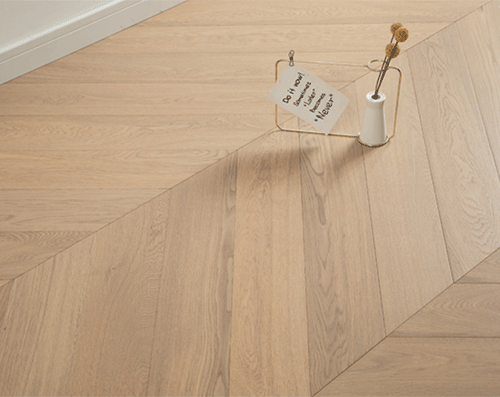
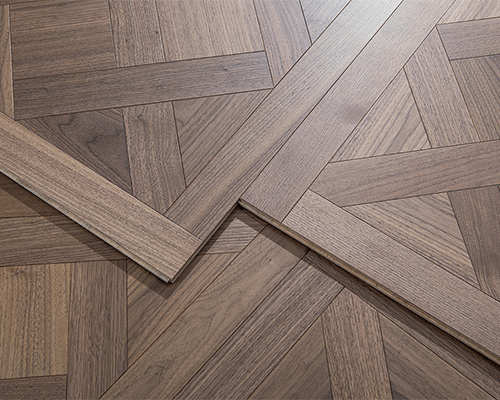
Herringbone and chevron patterns
Custom colors
Wire-brushed finishes
Smoked finishes
OEM and ODM services
These options allow contractors and distributors to meet diverse market demands.
Which Oak Flooring Is the Best Choice?
There is no single "best" oak flooring for every project. The right choice depends on budget, design preferences, installation conditions, and long-term performance requirements.
If your priority is luxury appearance and premium design, European oak is an outstanding option.
If you are looking for a balance of durability, moisture resistance, and versatility, white oak is one of the best all-around choices.
If you are working on a traditional residential project with tighter budget requirements, red oak remains a dependable solution.
For international buyers, it is always advisable to confirm the exact wood species rather than relying on general market terms such as "Chinese oak."
Frequently Asked Questions
Is European oak better than white oak?
Both are excellent hardwood flooring materials. European oak is often chosen for its elegant grain and premium appearance, while white oak offers outstanding durability and moisture resistance.
Why is white oak more popular than red oak today?
Many homeowners and designers prefer the neutral color and contemporary appearance of white oak. It also offers better moisture resistance than red oak.
Is Chinese oak the same as European oak?
No. "Chinese oak" is not an internationally standardized wood species. Buyers should always confirm the botanical species and product specifications with the manufacturer.
Which oak is best for engineered flooring?
Both European oak and white oak are excellent choices for engineered hardwood flooring due to their stability, attractive grain, and compatibility with modern manufacturing processes.
Which oak flooring is best for commercial projects?
Engineered European oak and engineered white oak flooring are widely used in hotels, offices, retail spaces, and other commercial environments because they combine durability with long-term stability.
Conclusion
European oak, white oak, and red oak each offer unique advantages, making them suitable for different flooring applications.
European oak is known for its refined appearance and exceptional stability, making it a favorite for luxury projects. White oak provides excellent durability, moisture resistance, and versatility, making it one of the most popular choices worldwide. Red oak remains a practical and cost-effective solution for traditional residential interiors.
Rather than choosing flooring based solely on price or appearance, contractors and importers should consider project requirements, manufacturing quality, and supplier reliability. A well-manufactured engineered hardwood floor will often deliver better long-term performance than a lower-quality product made from a premium wood species.
Contact Cozy Wood Flooring Manufacturer
At FOSHAN COZY IMPORT AND EXPORT CO., LTD and ZHEJIANG COZY WOOD PRODUCT CO., LTD, we specialize in manufacturing and exporting premium engineered flooring, parquet flooring, and solid wood flooring for customers worldwide.
With extensive experience serving contractors, distributors, wholesalers, and project developers across the USA, Canada, Australia, the Middle East, and other international markets, we provide:
Factory-direct pricing
Premium quality products
OEM & ODM manufacturing
Custom sizes and finishes
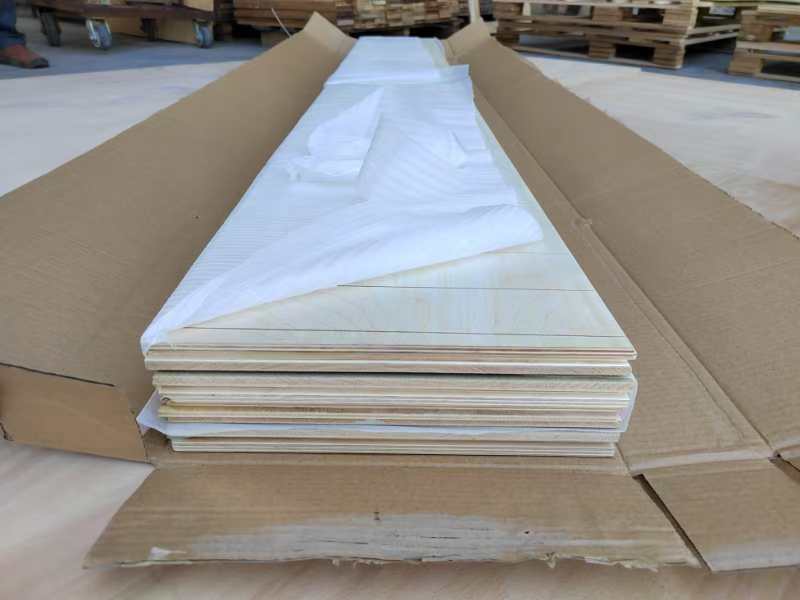
Professional export packaging
Fast delivery
Reliable technical support
Rich international export experience
Whether you're sourcing European oak flooring, white oak flooring, or custom hardwood flooring solutions, our experienced team is ready to help you find the right product for your next project.
Contact us today to request product catalogs, samples, or a customized quotation for your flooring business.